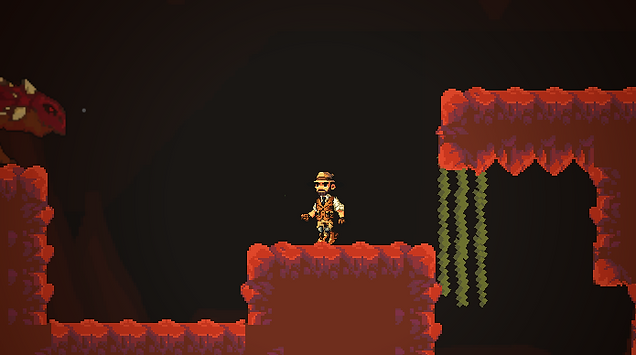
ARIZONA BONES
ROLE
Producer and Lead Designer
DESCRIPTION
Arizona Bones is a 2D platforming and combat Metroidvania-inspired game where players take on the role of Arizona Bones, an archaeologist unraveling the mystery of his missing colleague while encountering living dinosaurs. As both a designer and producer on this project, I contributed to system designs, progression mechanics, and production management.
DURATION
~34 weeks
TEAM SIZE
~11

ROLES
PRODUCER AND LEADER DESIGNER
I began as a designer, focusing on crafting gameplay systems, and transitioned to a producer role halfway through the project. As a producer, I led a multidisciplinary team of ~11 members, ensuring effective communication, task management, and scope containment to deliver a polished final product.

PRODUCTION CONTRIBUTIONS
Project Breakdown Sheet- Split weekly in a Google Document (previously in Trello but altered due to team agreement) and the Art Breakdown Sheet

LEADERSHIP AND TASK MANAGEMENT
- Stepped in as co-producer mid-project to provide guidance during a critical phase.
-
Created weekly sprints with co-producer Cate Start, assigning tasks across disciplines and monitoring progress using Google Docs (adapted from Trello based on team preference).
-
Acted as a central communication hub, resolving team conflicts and ensuring alignment
SCOPE MANAGEMENT
-
Scaled back content in response to time constraints while retaining core gameplay elements.
-
Held regular meetings to prioritize features and maintain a manageable scope.

Project Meeting Notes
TEAM INTEGRATION AND COLLABORATION
-
Onboarded one new designer and new artists late in the project by introducing them to the game, detailing their responsibilities
-
For the artists, I began providing an art-tracking sheet to streamline their integration.
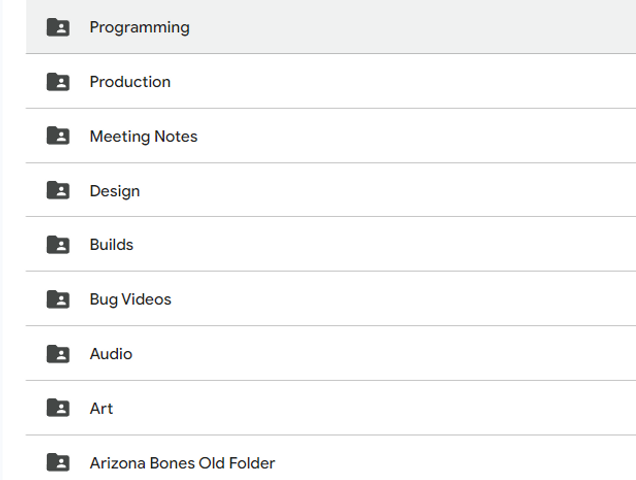
Project's Google Drive
CROSS-DISCIPLINARY COLLABORATION
PLAYTESTING AND FEEDBACK
-
Worked with leads and co-producer to review feature designs, implement feedback, and deliver milestones on time
-
Ensured dependencies between art, design, and programming were flagged and communicated effectively.
-
Conducted playtesting sessions as a team, as well as sought out playtesters
-
Maintained a comprehensive playtesting document, holding iterative review sessions with team members to refine gameplay based on feedback.

Notes made on whiteboard while leading a design meeting
DESIGN CONTRIBUTIONS
GAME ENVIRONMENT AND ITEM DESIGN
-
Collaborated with the team to establish level themes and align progression items with the chosen environments.
-
Example: Designed thematic integration of items like the knife for cutting through vine-covered areas in the "Nesting Grounds" (a nature-focused part of the level) and the pickaxe for crystal-covered areas in the "Crystal Forest."
-
-
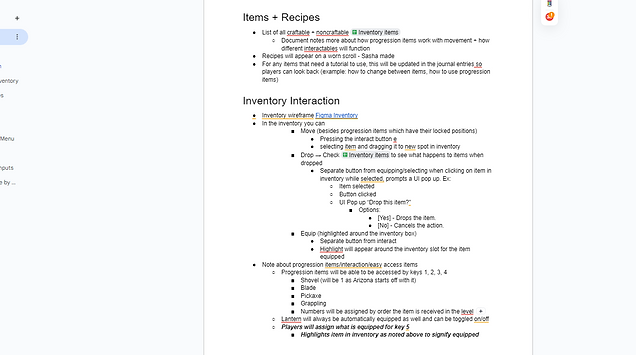
Created and iterated design documents outlining item functionality and thematic integration. Maintained an ongoing Google sheet for tracking in-game items, which underwent multiple iterations.

Designed the journal and inventory - In game and Figma
-
Reviewed existing crafting systems and expanded item recipes.
-
Made the strategic decision to cut the crafting system due to time constraints, preserving the most critical mechanics like dinosaur bait and distraction rocks.
-
Designed core game menus, inventory, and journal systems, iterating layouts and functionalities to align with gameplay goals.
-
Implemented Unity’s new Input System, teaching team members how to integrate it into their work.
SYSTEM DESIGN AND REFINEMENT
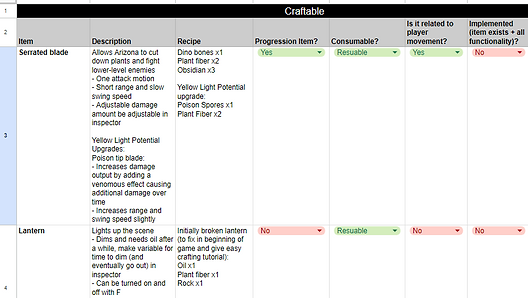
Systems Document
ITERATIVE DEVELOPMENT
-
Held design meetings to adapt systems and address feedback.
-
Documented changes and conducted playtesting to refine mechanics.
Inventory Items Document
Conclusion
Arizona Bones was a project that allowed me to develop and showcase my skills in both game design and production. From designing thematic progression mechanics to leading a multidisciplinary team, I learned further about the importance of adaptability, clear communication, and effective scope management.
KEY TAKEAWAYS
-
Balancing creativity with production constraints is essential for delivering a cohesive game.
-
Communication and flexibility are critical when working with new team members or shifting team dynamics.